
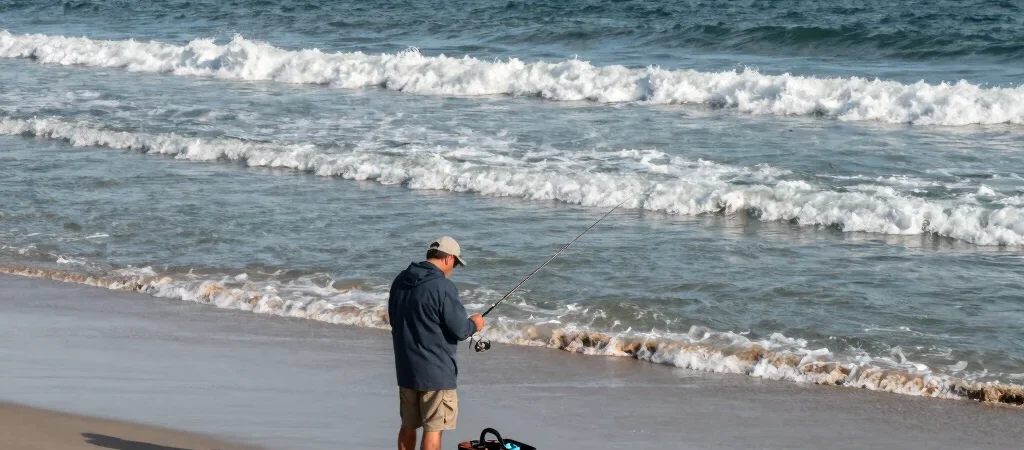
A beach that looks spacious at low tide can become a narrow strip of sand as the water returns. For shore fishing, the tide affects more than where you cast: it can change safe access, expose or cover structure, and close off a route back. Plan the whole visit around those changes, not just the moment you hope to fish.
Read more than the tide chart
Check a local tide prediction for the specific area, then compare it with the forecast for wind, swell, and weather. A chart does not describe every beach condition, and local water levels can be affected by weather. If the surf is beyond your comfort level or the route back may be cut off, choose another place or another day.
On arrival, watch the water for a few minutes before setting down gear. Look for channels, breaking waves, exposed rocks, and places where the shoreline funnels water. Keep an exit route in mind, and do not wade into moving water simply to reach a casting distance.
Pack for a changing shoreline
Keep the kit compact enough to move: a rod suited to your intended bait or lure, terminal tackle that matches the target species, and a way to carry essentials without leaving them in rising water. A headlamp, drinking water, weather-appropriate layers, and a charged phone are sensible additions for a longer visit. Secure hooks and other sharp tackle before walking across a busy beach.
Make regulations part of the plan
Saltwater rules can differ by state, species, and even the specific shoreline. Before leaving, verify license requirements, open seasons, size and possession limits, protected areas, and any restrictions on bait or gear with the relevant local authority. Identify the target before keeping a fish, and release it promptly when regulations or your own plan call for release.