
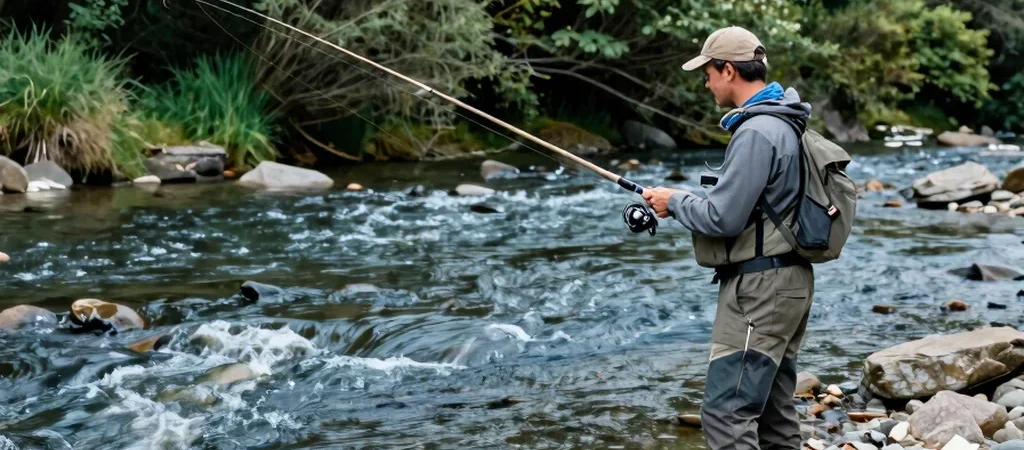
At a river bend, the obvious casting spot is not always the useful one. Before tying on a lure, watch a few minutes: leaves and foam reveal the current, while an inside seam or the edge of a riffle can show where moving water meets slower water. Reading that shape gives your first cast a reason.
Follow the current seams
Look for a line between fast and slow flow, the downstream side of a boulder, or the softer water beside a riffle. These places give fish a chance to hold out of the strongest current while watching food drift past. Approach from downstream when the bank allows, and keep your outline low against the water.
A float, a drifting bait, or a small artificial lure can all work along a seam; the useful choice depends on the species, water conditions, and local rules. Make a few controlled casts before changing tackle. If the presentation moves unnaturally fast or repeatedly catches bottom, adjust the angle or depth first.
Let the water set the pace
Cast slightly upstream and allow the offering to travel with the current, keeping just enough line control to notice a take. On a shallow riffle, a shorter drift may be all you need; in a deeper pool, finding the right depth matters more than covering the whole surface. Make one change at a time so you can tell what helped.
Check the rules and footing
River access, open seasons, permitted methods, and size limits vary by location and species, so check the current regulations before fishing. Protected stretches may have additional restrictions, including rules about bait or handling. Wear footwear suited to slippery banks, and avoid stepping into fast water just to reach a casting position.